Call Us Today!

(801) 618-1197
David G. Johnson D.D.S. - Facebook David G. Johnson D.D.S. - Instagram David G. Johnson D.D.S. - Twitter David G. Johnson D.D.S. - LinkedIn David G. Johnson D.D.S. - Pintrest
Request an Appointment
David G. Johnson DDS, DC Logo Layton, Centerville, UT

David G. Johnson, D.D.S.

  • Root Canal
  • Procedures
    • Root Canal
    • Endodontic Retreatment
    • Apicoectomy
    • Cracked Teeth
    • Traumatic Teeth Injuries
    • Resorption Repair
    • 3D Imaging (CBCT)
  • Patient Resources
    • Patient Forms
    • Informational Informed Consent Oral Sedation Form
    • Insurance and Financial Policy
    • What is Endodontics?
    • General Instructions
  • Our Practice
    • Dr. David Johnson
    • Our Team
    • Testimonials
    • Blog
  • Contact Us
    • Layton Contact Us
    • Centerville Contact Us
  • Referring Doctors
    • Referral Form

Is It Normal For Your Crown To Feel Fake?

Home | Root Canal | Page 3

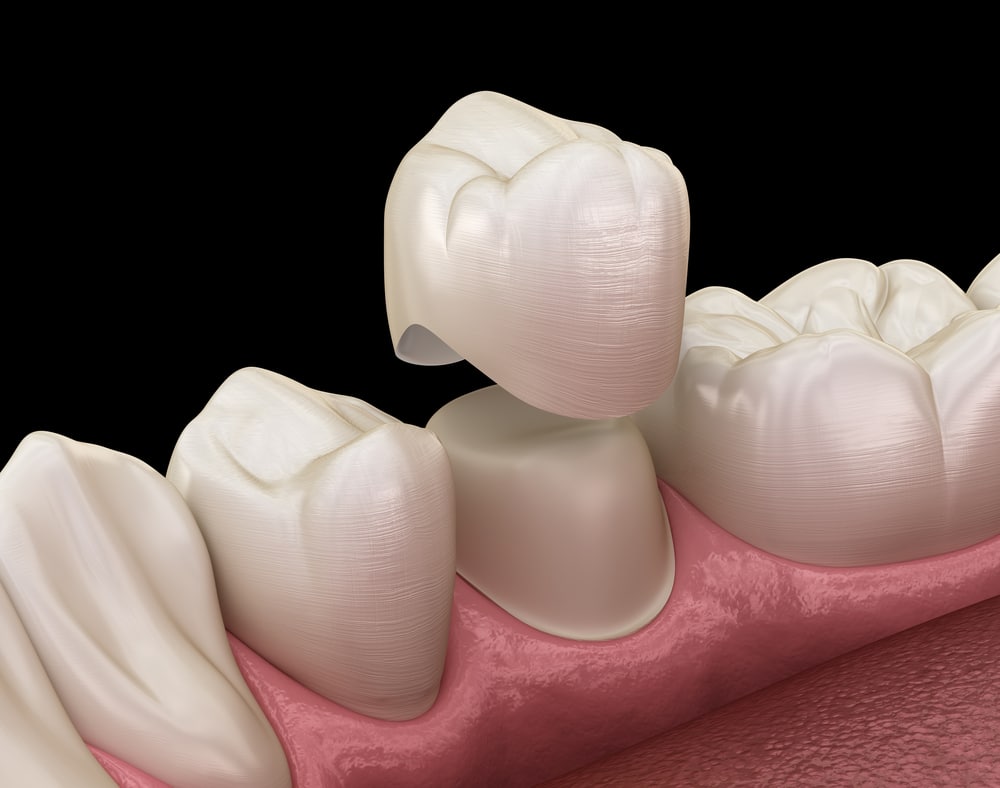
Whenever you have dental work done, your tooth may feel a bit off for a day or so. However, your bite should feel normal again quickly. If you have a crown put in, you may wonder whether or not it is normal for said crown to feel fake or if this means that there is something wrong. In truth, it depends. Here is what you need to know about adjusting to your new crown and when you should go back to the dentist to have the crown looked at.

care after root canal

How Long Does It Take To Adjust To A Dental Crown?

If your crown feels fake for the first couple of days, this is normal. A crown is a restoration, which requires a procedure in order to put in. While dental crowns are customized to fit your mouth, when you first have one put in, you may experience some sensitivity and irritation. Your crown may feel fake for a week or two as you adjust to your restored bite.

You should experience improvement each day following the procedure. You may need to be a bit careful for the first few days with what you eat and drink and how you brush and floss, but everything should feel more and more normal as the days go by.

However, if you do not notice improvements, this could indicate a complication. You will want to talk to your dentist about this.

Should Your Crown Feel Fake?

When you first have a crown put it, it may feel very fake for a couple of days to a couple of weeks. It may feel bulky and it may take some adjusting to get used to your improved bite. However, over time, you should adjust and your crown should feel normal. 

You should not be able to notice your crown. Many people even forget that they have a crown due to the measures taken to ensure that it both looks and functions like a natural tooth. If your crown still feels fake after a couple of weeks, you will want to discuss this with your dentist. It may not be properly fitted to your mouth or it may need some reshaping.

So, in short: no, your crown should not feel fake after you have had it for a while. You should be able to forget that it is there. Even while you are adjusting to your crown, you should be able to close your mouth like normal and you shouldn’t be in pain. 

Do Crowns Feel Different From Natural Teeth?
your crown feel fake

The material that a crown is made out of can affect how it feels in your mouth. All crowns are customized to fit your mouth and checked for proper bite and slides. They should feel comfortable and natural in your mouth. 

Your natural teeth have a small amount of flex and bend to them. This means that porcelain crowns may feel a tiny bit different from the rest of your teeth, since they do not have the ability to flex. Metal and alloy crowns can have some flex to them, like natural teeth. However, regardless of the type of crown that you have, it should fit and feel like a natural tooth. 

Your dentist will check your crown for proper alignment and fit. If you call your dentist and tell them that your crown feels fake when you have just gotten it, they will likely tell you to give it some time. In many cases, people adjust and then forget that the crown is there.

However, if your crown feels very off, it could be improperly fitted or there could be another underlying issue. If you have not adjusted to your new crown after a week or two, you can go back to the dentist to have it checked.

Signs That Your Crown May Not Be Properly Fitted

If your crown is not properly fitted, it can feel fake and you can experience other problems. Some of the signs that you may need to get a better fit include:

  • Your bite feels off.
  • There is pressure on the neighboring teeth.
  • Food gets stuck around the crown.
  • The crown is loose.
  • The crown comes off.
  • Chewing is painful or inefficient.
  • Your gums are red and inflamed.

If your crown is not fitted correctly, your dentist should notice this and correct the problems before you even know. However, if problems develop after you have gone home from the dentist, you will want to let them know.
difference between endodontists and dentists

In the event that your dentist tells you there is nothing wrong or you are doubtful about what they tell you, it never hurts to get a second opinion. What one dentist misses, another can catch and fix.

David G. Johnson, DDS, provides expert endodontic services. We will help you however we can with your crowns after root canals. Contact us today at either our Layton or our Centerville location to learn more about our endodontic services.
Filed Under: Root Canal

history of root canals

Root canals have quite the reputation. In spite of the fact that they’re evolved into a normal dental procedure and one that is no more painful than having a cavity filled, myths still persist, like claims that they’re excruciatingly painful to have done or that they can make you sick. Learning a bit about the history of root canals can help you understand where these myths come from and how it is that the field of endodontics has evolved to alleviate patients’ pain.

If you’d like to learn more about popular myths about root canals or just how painful root canals are, check out our previous blogs: 4 Myths About Root Canals Debunked and Are Root Canals Painful? However, if you’re more interested in the history of root canals, keep reading.

Endodontics Dates Back At Least As Far As 200 B.C.

The Romans are credited with the development of dentistry, potentially due to Greek doctor, Archagathus. Endodontics comes from the Greek words “endo”, which means within, and “odont”, which means tooth. While Dr. Harry B. Johnston coined the term in the 1900s and his was the first practice considered to be limited to endodontics, this type of treatment has been around a long time.

history of root canals

While there’s no way to know just how long people have been doing endodontic treatments, archaeologists discovered a human school in the Negev Israeli desert. This skull had a tooth with a bronze wire in it, which is assumed to have been used to treat a dental infection. It’s also assumed that the Romans are the ones who invented crowns, as well as dentures.

People Believed Root Canals Were Caused By “Tooth Worms”

This theory lasted an incredibly long time, all the way from Babylonian times through the 18th century. The idea was that there were small worms within your teeth. When you had toothaches, gum disease, or cavities, it was thought that this was because of tooth worms drinking blood and eating away at the interior of your teeth. 

Physicians would report worms coming out of teeth after scraping around them. Since tooth pain would then be alleviated after the scraping, people believed that removing the worm removed the pain. This part of the history of root canals was then disproven by M. Pierre Fauchard. It was found that when you remove the partially or completely necrotic tooth pulp, it can indeed look like a worm, even though it is not. 

Endodontics Continually Evolves Throughout History To Improve Patient Comfort

There’s a reason why people believe that root canals are excruciating: they definitely used to be. Throughout the history of root canals and endodontics as a whole, people have continually sought ways to improve their treatment of these dental issues.

For instance, in the early 1800s, Leonard Koecker would cauterize tooth pulp after exposing it. It would then be protected with lead foil. People have sought to improve the instruments used, such as how Edwin Maynard created an instrument from watch springs specifically for conducting root canal treatment. Edwin Truman used gutta-percha to fill root canals, which is still used to this day.

S.C. Barnum then used rubber leaves in order to isolate the infected tooth during treatment. With G.A. Bowman, he then brought rubber dam clamp forceps to the field, which is another thing endodontists still use today.

In the late 1800s, the first X-rays were discovered, which revolutionized the field of both medicine and dentistry. Since then, endodontics continues to improve in leaps and bounds, having since evolved into a normal dental procedure with endodontics as a normal, recognized dental specialty. 

As for the pain, as early as the early 1700s, people were trying to find ways to alleviate the pain. From clove oil with its sedative properties to pulp caps to the invention of anesthesia, throughout the history of root canals, practitioners have sought ways to make the treatment more comfortable and better for their patients. 

Endodontics Today

endodontic retreatment

As you can see, we still don’t even know the full extent of the history of root canals. This isn’t even anywhere near a comprehensive history of root canals – not even close! However, for thousands of years, people have sought to alleviate the pain from them with a variety of treatment methods.

Endodontics continues to evolve as a practice. The more that we learn about the body and treatment methods, the more dentistry improves in order to ensure that people receive the highest quality care possible.

David G. Johnson, DDS, provides professional endodontic treatments. Whether you need a root canal or endodontic retreatment, you can count on us to help you. Contact us today to learn more about our services or to schedule an appointment. 

Filed Under: Root Canal

Crowns are tooth-shaped caps that are placed over your natural tooth and cemented in place in order to protect your natural tooth and to restore its functionality. They’re commonly associated with root canals – but do you need a root canal in order to get a crown? Can you get a crown without a root canal? Is it possible for an existing crown to have a root canal done on it?

These are all excellent questions. Here’s what you need to know about when a crown will need a root canal, either to have it installed or to have a root canal done on an existing crown, as well as whether all crowns need a root canal. Let’s get into it!

Do You Need A Root Canal In Order To Get A Crown?

existing crown need a root canal

Not always! Since dental crowns are made to protect your teeth, there are instances in which you can need a crown without needing to have a root canal done first.

Some of the instances in which you can get a crown include:

  • As anchors for dental bridges
  • To restore chipped or broken teeth
  • To improve the appearance of discolored teeth

Generally, if your tooth has minor damage to it, root canal therapy may be unnecessary and you can have a dental crown put in without it.

Do You Need A Crown When You Get A Root Canal?

More often than not, yes, if you have a root canal done, this means that you will need to have a dental crown placed on the tooth that had the root canal. However, there are cases in which you can have a root canal done without needing a crown. You will need to talk to your endodontist about your specific situation. 

Generally, the more damaged your tooth is, the more likely it is that you will need a crown. If the root canal was done on one of your back teeth, you will also more likely need a dental crown. Also, if the tooth that gets a root canal has already been restored, it will likely need a crown.

You typically need a crown when you get a root canal because:

  • They strengthen your tooth.
  • They prevent infection.
  • They protect it.
  • They restore a natural look.

Can A Root Canal Be Performed On A Crown?

existing crown need a root canal

If you have a crown in your mouth, you may assume that this means your tooth is protected forever. However, crowns need to be cared for and cleaned the same as your natural teeth do in order to prevent decay. 

This can lead people to wonder whether or not a tooth that already has a crown on it can need a root canal. 

Sometimes, yes. Other times, no.

Root canals can be done on existing crowns if the damage is not too extensive. After the decay has been excavated, the crown would be sealed up, the same as a normal tooth. 

However, if the damage is extensive, the crown has been damaged, or further damage to the tooth is discovered during the root canal, then you typically cannot have a root canal performed on a crown. You may need to have the tooth extracted. 

Your endodontist will work with you on your specific case in order to inform you of the options available to you. Depending on your circumstances, the options available to you can vary.

Your endodontist will always do everything in their power to save your natural teeth. Extraction should only ever be used as a last resort, because impressive though modern implants and the like are, they’re no match for your natural teeth. 

Do You Have Further Questions About Crowns And Root Canals?

If you are considering obtaining a crown, it’s best to consult with your dentist about the options available to you. They will go over why you want or need a crown and what your options are. In some cases, you may need a root canal first. 

difference between endodontists and dentists

If this is so, your dentist can refer you to an endodontist, like David G. Johnson, DDS. We perform root canals regularly. While pop culture may have built up this idea of root canals being this excruciatingly painful procedure, the reality is that with modern advancements, they’re quite similar to having a cavity filled, just with more recovery time.

To request an appointment, please do not hesitate to contact us today. We have offices in both Layton and in Centerville, so that we can better serve you. 

Filed Under: Root Canal

  • « Previous Page
  • 1
  • 2
  • 3
  • 4
  • Next Page »

Layton Hours

195 E Gentile St #2
Layton, UT 84041
Phone: (801) 618-1197
Monday 8:00 AM - 5:00 PM
Tuesday 8:00 AM - 5:00 PM
Wednesday 8:00 AM - 5:00 PM
Thursday 8:00 AM - 5:00 PM
Friday Closed
Saturday Closed
Sunday Closed

Medical Disclaimer: Information on this site is not medical advice and is for educational purposes only. No doctor-patient relationship is formed. Click here for Full Legal Disclosures

Directions

Centerville Hours

281 S Main St #6
Centerville, UT 84014
Phone: (801) 285-6603
Monday 8:00 AM - 5:00 PM
Tuesday 8:00 AM - 5:00 PM
Wednesday 8:00 AM - 5:00 PM
Thursday 8:00 AM - 5:00 PM
Friday Closed
Saturday Closed
Sunday Closed

Directions

2026David G. Johnson, D.D.S. | All Rights Reserved | Privacy Policy | Terms | Accessibility Statement | Anti Discrimination Disclaimer | Healthcare Disclaimer | HIPAA Notice of Privacy Practices | XML Sitemap | Sitemap | Site by PDM