



Tooth enamel may be the hardest substance in the human body, but it’s not indestructible. Every day foods, drinks, and habits can wear it down over time. And once the enamel erodes, the softer dentin and even the tooth’s nerve can become exposed, leading to sensitivity, pain, and in serious cases, infections requiring root canal treatment.
Here’s what to watch out for and how to protect your smile.
Why Enamel Matters
Enamel acts like armor for your teeth, protecting them from bacteria, acids, temperature changes, and damage from chewing, biting, and grinding. It also gives teeth their white, shiny, and healthy appearance. However, unlike bone, enamel cannot regenerate. When it wears away, the tooth becomes more vulnerable to decay, cavities, chips, cracks, and nerve irritation.
Foods That Damage Tooth Enamel
Sugary Snacks and Drinks
Candy, baked goods, soda, and energy drinks feed oral bacteria. These bacteria produce acid that erodes enamel and increases your risk of cavities that can eventually reach the nerve.
Tip — If you indulge, rinse with water afterward and avoid frequently snacking on sugar all day.
Acidic Fruits and Juices
Citrus fruits (like oranges, lemons, and grapefruits), tomatoes, wine, and fruit juices can soften enamel. Over time, frequent exposure to acid wears down the surface.
Tip — Drink juices through a straw and pair acidic foods with meals rather than eating them alone.
Sports Drinks
They may seem healthy, but most sports drinks combine high sugar with acidic pH, which presents a double threat to enamel.
Tip — Choose water instead of a sports drink whenever possible.
Starchy Foods
Chips, crackers, white bread, and pasta break down into sugar and can get stuck in the crevices of your teeth, causing prolonged acid production.
Tip — Balance starches with protein and fiber, and brush well to remove residue.
Habits That Damage Tooth Enamel

Grinding and Clenching (Bruxism)
Whether due to stress or sleep issues, grinding your teeth and clenching your jaw can place excessive pressure on enamel and can flatten, crack, or chip teeth. It can also irritate the nerve, causing sensitivity or pain.
Fix — Practice relaxation techniques, improve sleep habits, address your posture, and ask your dentist about a custom nightguard.
Overbrushing or Using a Hard-Bristle Toothbrush
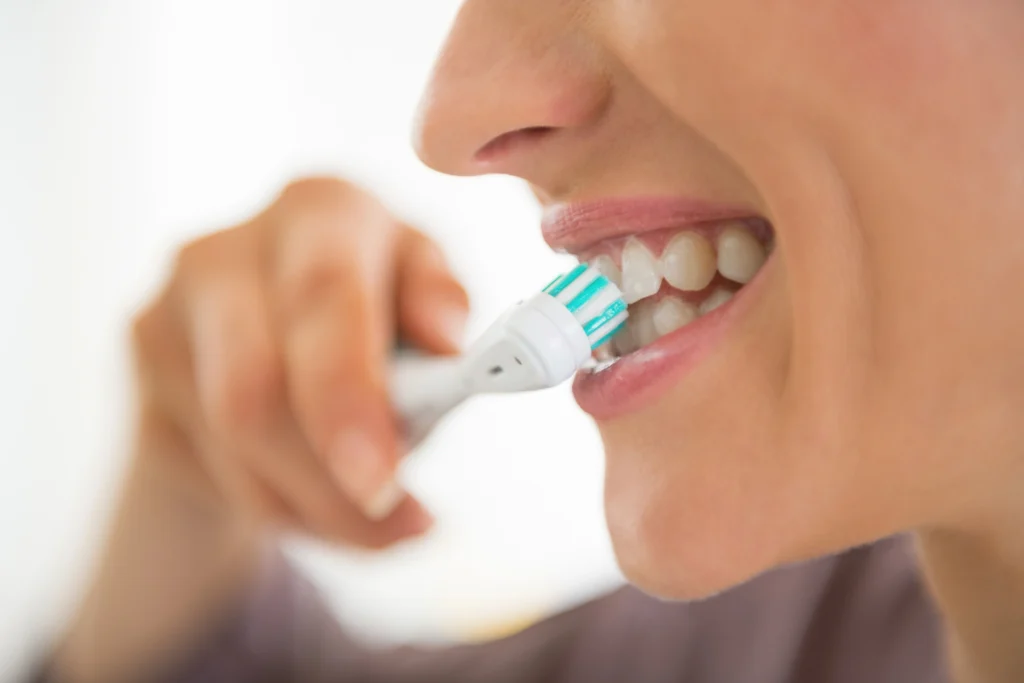
Brushing too hard, using a hard-bristle toothbrush, and choosing an abrasive toothpaste can wear tooth enamel down, especially near the gumline.
Fix — Use a soft-bristle toothbrush, smooth toothpaste, and gentle circular motions when brushing.
Chewing Ice
Ice may seem harmless, but its hardness can crack enamel and damage fillings. Cracks allow bacteria to reach the inner layers of the tooth, potentially irritating the nerve.
Fix — Avoid chewing on ice in your drinks.
Frequent Snacking
Constant snacking, especially on carbs or sugary foods, keeps your mouth in a consistent acidic state, preventing tooth enamel from remineralizing.
Fix — Stick to planned meals and choose tooth-friendly snacks like nuts, cheese, or raw vegetables.
Using Teeth as Tools
Opening packages with your teeth or biting your nails may seem quick, convenient, and stress-relieving, but you risk creating fractures that expose the inner pulp of the tooth.
Fix — Keep scissors or nail clippers handy instead of relying on your teeth.
Other Factors
In addition to certain foods and habits, some medical conditions can contribute to enamel wear:
Acid Reflux (GERD) and Vomiting — Stomach acid makes direct contact with your teeth and starts to erode the enamel.
Dry Mouth — A lack of saliva allows acids and bacteria to attack enamel more easily.
Certain Medications — Antihistamines, antidepressants, aspirin, and high blood pressure meds can cause dry mouth and erode enamel.
Signs Your Enamel May Be Wearing Down
Watch For:
- Increased tooth sensitivity
- Sharp pain when eating hot, cold, or sweet foods
- Yellowing teeth (dentin showing through)
- Chips or cracks
- Rough or uneven edges
If you ignore these symptoms, bacteria can reach the pulp of the tooth, leading to inflammation, infection, and the possibility of root canal therapy.
How to Protect Tooth Enamel
To keep your tooth enamel strong, you should:

- Brush twice daily with fluoride toothpaste
- Floss every day
- Drink plenty of water, especially after acidic meals or snacks
- Avoid brushing immediately after eating acidic foods
- Visit the dentist every six months for cleanings and early detection
- Wear a mouthguard at night if you grind your teeth
Protect Your Enamel to Avoid Cavities and Root Canals
Your daily habits and food choices play a huge role in protecting your tooth enamel and preventing nerve problems. By being mindful of what you eat and how you care for your teeth and attending regular dental checkups, you can catch problems early and keep your smile strong, healthy, and pain-free for years to come.


